Luna (Lunar)
No words can fully truly describe the magnificent appearance of this vase, nor any photo could capture it. I wish you could be there, inside our studio, hold it with your two hands and let the vase draw your eyes into its cracks, its layer, its colours…
Using white stoneware clay as the canvas, wheel-throwing technique for shaping, three types of glaze as my paint, all together, we steal the galaxy and put it onto the moon vase. From sculpturing the vase to applying glazes, nothing was planned or sketched beforehand, as if the vase wished to be born so badly it guided my hands and the idea flowed through my mind naturally, almost fated.
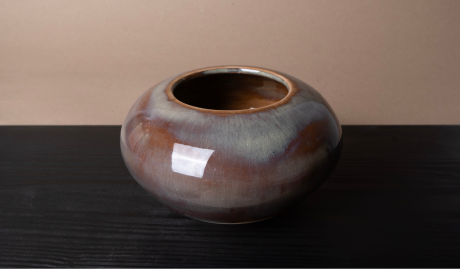
It would initially strike the observer with how smooth, shiny and
reflective the surface is. Then the closer you look, the more
hypnotized you are by the layers of the colour. The brown foundation
creates a deep base while the white strip with cold blue hue gives a
stalactite effect, tricking our eyes that the colour is floating like
the aurora near the Arctic or Antarctic circles, the tiny dots
reimagining the milky way, and the cracks just add a unique
personality to it.
“As Above, So Below”. True to its name, the vase
emulates the moon, echoing the surroundings like how the moon reflects
the sunlight from the other side of the globe to glow magnificently in
the dark sky amongst the stars. Underneath all of that quiet and
peaceful beauty is a network of fine cracks, signifying the mystery in
life, it is always more than what meets the eyes, a storm beneath the
calm surface, we never know what is actually going on in one’s life…
The effect has its own name, crazing, and it is due to the difference
in contract and expansion between clay and glaze under different
temperatures, quite a unique feature.
Mid-autumn 2025
The shape, the colour, and the occasion made up its identity. And what could bear the feminine energy of the moon better than the word “Lunar”- humanise it into Luna. “To define is to limit” (Oscar Wilde), naming a thing is to cage it into something but also giving it a soul, a familiar connection to humans, a more imaginative effect.
Generally speaking, crazing is the consequence of thermal expansion mismatch between body and glaze. It could be right at the cooling step of the firing process or overtime when the piece is exposed to thermal shock. Craze with intention is called crackle and it is a league of its own. Crazing is not food safe, recommended for decorative products only unless the potter is very certain at what they were doing and carefully did all the due diligence of testing it.